






Book Of Dead

Book Of Dead Game In France: Demo Mode

2026 tips for testing Book Of Dead in demo, setting the bet, understanding the features and playing in France with control.

Book Of Dead demo
game image 1
Book Of Dead

Why Book Of Dead Game Attracts In 2026

Book Of Dead remains a classic for a simple reason: the game gets straight to the point. Readable visuals, understandable mechanics, and a dynamic that alternates between calm sequences and more intense moments. In France, it is often found via online casinos accessible to adult players, within a framework that must remain compliant with applicable rules - no promises, no shortcuts, just an entertainment experience.

Imagine the scene: you open the game after work, you want “something simple” and you don’t feel like reading ten menus. Book Of Dead responds well to this need. But this directness can also trap you: when everything is simple, you chain without a plan, then you are surprised by the time spent.

The other reason for its success is the atmosphere. Many players like these “adventure” themes because they give a sense of progression, even when the session is short. The risk is to confuse narrative progression with results progression. One can be pleasant; the other is unpredictable.

To play correctly in 2026, the right attitude is not “I’m going to win”, but “I’m going to manage a session”. You manage time, a stable bet, and an exit point. The rest follows.

What Demo Mode Really Teaches You

Demo mode is used to read the game without financial pressure. You observe the speed, the clarity of the symbols, the settings, and especially your reaction when nothing happens for a few spins. This is where you understand if a format relaxes or annoys you.

Imagine you test for five minutes and find yourself speeding up because “it’s slow”. This is a valuable signal. Generally, when this signal appears in demo, it will also appear in real play - and that’s exactly what a good routine should anticipate.

Use the demo as a rehearsal: you play in short blocks, you take an off-screen break, then you decide if you continue. If you can't do that for free, you'll have even more trouble when real money comes into play.

Book Of Dead

Top casinos for playing Book Of Dead — current list

ALF Casino

ALF Casino

Mafia Casino

Mafia Casino

SG Casino

SG Casino

Retro Bet

Retro Bet

leovegas

LeoVegas

Book Of Dead

Launch Book Of Dead Game In Demo Without Rushing

Starting in demo mode means choosing a clean context. This means: a stable device, a correct connection, and available attention. On mobile, it's not “technical”, it's practical: battery, notifications, multitasking. On computer, it's often tabs, cache, and autocompletion.

Imagine the situation: you're testing on public transport, the network is spotty, and you're trying to “understand quickly”. You'll click more, not better. Generally, testing becomes useful when you slow down: a few manual spins, an observation, then an adjustment.

The first objective is not to look for a “good streak”. It is to identify the settings that give you control: bet, speed, and stop. Only then do you explore the functions and changes in dynamics.

Book Of Dead Game: Buttons, Bet, Speed

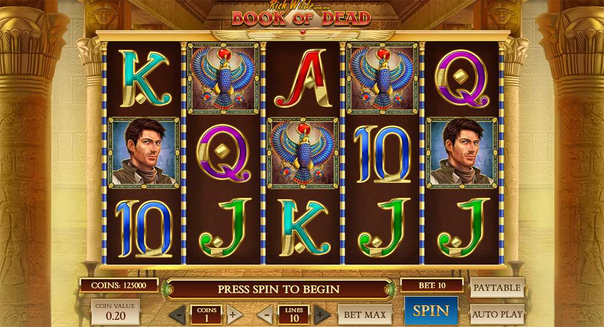
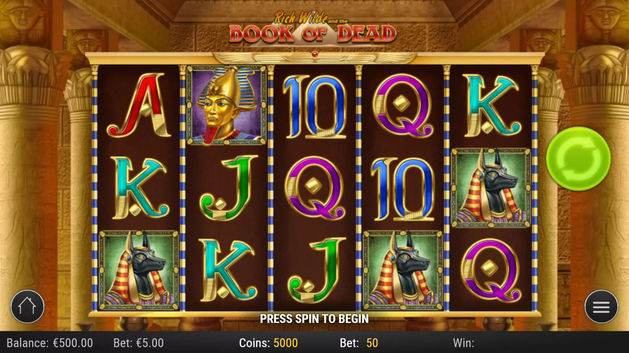
The best test starts with the interface. Where do you change the bet? Where do you adjust the speed? How do you stop an action if you want to take a break? Take two minutes to find these points. This is what prevents you from the famous “I don’t know where to click anymore” in the middle of a session.

Imagine you accidentally change the bet, then try to “go back” quickly without checking. Generally, you end up playing with an amount you hadn't planned. The right method: fixed bet on a block, medium speed, and change only between blocks.

To test the speed, don't start at maximum. Start slowly, then move to medium. If you feel your clicking speeding up or you're looking at the screen less, you've exceeded the useful speed for you.

Book Of Dead

Building A Short And Realistic Session With Book Of Dead Game

A “realistic” session is not a perfect session. It's a session that ends when you decide it does. In 2026, the most common trap is not complexity, it's automatism: you launch, you chain, then you say “just a little more” without seeing the clock.

Imagine you start with the idea of 10 minutes and find yourself at 35 minutes. This slippage often happens when there's no time block. Generally, players who maintain control use a simple rule: a timer and a mandatory break.

A good session consists of three lines: duration, bet, and exit. The exit is not “when I win”, it's “when my timer goes off” or “when my session budget is reached”. You remove internal negotiation. You gain comfort.

Book Of Dead Game: Routine 10-15 Minutes

Adopt a block routine. 3 minutes to set the bet and speed, 10 minutes to play at a stable pace, 2 minutes to decide whether to continue or stop. The decision is not made in the middle of an emotional peak, it is made at the end of the block.

Imagine you reach the end of 10 minutes and you “really want” to continue. Very well. Generally, a two-minute off-screen break is enough to clarify whether this desire is pleasure or tension. If it's tension, you close. If it's pleasure, you do a second block, not an hour.

Keep the same bet throughout the block. If you change the bet along the way, you are no longer testing the game, you are testing your impulsivity.

When to Stop Without Negotiating

There's a phrase that betrays autopilot: “just one more”. If you repeat it, you are no longer choosing, you are reacting. The best rule: at the second repetition, immediate shutdown.

Imagine you want to “end on a good note”. It's human. But generally, this note becomes an excuse to prolong, especially when you're tired. A good replacement: “I finish when I'm still lucid”. That's a truly good note.

And if you play because you're stressed, make an even simpler decision: short test or nothing. The game should remain entertainment for adults, not a tool to compensate for a difficult day.

game image 2
Book Of Dead

Read The Key Functions And Moments Of The Game

Book Of Dead is easy to pick up, but it has moments where the dynamic changes. These are the moments that give the impression that “anything can happen”, and it's also where players sometimes lose their plan. The goal is to learn to recognize these passages and remain stable: same bet, same rhythm, same timer.

Imagine the scene: you feel a surge of excitement, you tell yourself that “something is going to start”, and you change your bet. Generally, this change is not thought out, it is emotional. The best training in demo is to change nothing when emotion rises, then decide afterwards.

To read the game well, focus on one point at a time. One block for readability and tempo. One block to identify what triggers the more significant phases. One block to test your comfort on mobile (fatigue, distraction, etc.). When you mix everything, you learn nothing, you suffer.

Book Of Dead Game: Reading Symbols Without Stress

To understand a slot, you need to be able to explain what's happening in one sentence. “I saw this symbol, then this effect, then this result.” If you can't do that, you're playing too fast or haven't looked at the info panel.

Imagine you see a “special” sequence and you don't know why it started. Generally, frustration comes right after, and you speed up to “see if it comes back”. The right reflex: pause, quick read of the info, then slow resumption.

Once you understand, don't try to “force” these moments. The game doesn't obey you. You, on the other hand, can obey yourself: same bet, same block, and stop on time.

Choosing Between Manual And Automatic

Manual mode keeps you present. Automatic saves you time, but it can also steal your attention. The healthiest approach is hybrid: manual at the beginning of each block, then automatic in mini-series if you are focused, with a programmed stop.

Imagine you activate automatic and start replying to messages. You come back, you no longer know how long you've been playing, and you restart by reflex. Generally, that's where the session goes off track. A simple rule: no automatic if you're not able to watch the screen.

If you play on a computer, the trap is the same: tabs, multitasking, and “I'll just let it run”. Your routine must be stronger than your distraction.

Keeping Control After A Series

A negative streak should not trigger a decision. If you change your bet “to recover”, you are turning entertainment into repair. Repair is bad advice.

Imagine you feel annoyance rising and you tell yourself “I can't stay on this”. Generally, this phrase prolongs the session. Replace it with a rule: “if I'm annoyed, I stop”. That's the most effective adult reflex.

And if you've had a positive streak, the rule still applies. Euphoria also pushes you to prolong. True control is also stopping when things are going well.

Book Of Dead

Deposits And Withdrawals In France: Clear Path

Even if you mostly play in demo, sooner or later you'll look at the “account” section. The classic mistake is to deal with it in the middle of a session, when emotion is already present. The right framework: you play according to your plan first, then you manage operations in a calm moment.

Imagine you confirm an operation on an unstable network and the screen loads for a long time. Generally, the urge to restart appears, and that's where duplicates are born. The simple rule: one action, then verification in the history, and only then a new step if necessary.

Stick to one main method. Constantly changing methods often complicates tracking. And if a verification is requested, do it properly once, not five times halfway.

Point To Check

Where to Look

What You Do

Why It Helps

Pause Signal

Deposit

Cashier / Balance

confirm only once

avoids duplicates

slow screen or unstable network

Withdrawal

Wallet / History

one request, then follow-up

keeps a clear thread

desire to re-launch multiple times

Verification

Profile / Documents

clear photo, consistent info

limits back and forth

fatigue or annoyance

Limits

Account Settings

session time + budget

breaks the automatism

"just one more" that repeats

Support

Help / Messages

one main request

more useful response

too many changes at once

Prepare Cold Checks

The best time to prepare your profile is when you have no emotional stakes. Accessible email, consistent information, clear documents if requested. It's not a promise of speed, it's a way to avoid chaos.

Imagine you want to settle an account point at the end of a session, already tired. Generally, you'll do it quickly, and thus poorly. Preparing in advance means saving time when you have the least of it.

And if you need to contact support, do so with simple details: approximate time, device, precise step. Not a novel. A clear description.
game image 3

Support, Mobile And Security In 2026

On mobile, security is mostly a matter of habits. Device lock, session logout, no passwords on a shared phone. Add to that a rule of use: no session when you are too distracted. In France, access must remain reserved for adult players, with a personal account.

Imagine the scene: you leave the phone open “just long enough to reply”. Then you come back and mechanically restart. Generally, that's how the session becomes a habit. The good routine: close, put down the phone, and decide to resume only if you feel like it, not out of reflex.

Technical comfort also plays a role. A phone that heats up, a low battery, an unstable network - all of that makes you impatient. And impatience pushes you to click quickly. The best solution is often not to insist: pause, recharge, resume later.

Book Of Dead Game: Solving A Problem Without Getting Annoyed

When something doesn't work, the rule is simple: one variable at a time. Close the application, check the connection, restart. If the problem persists, change only one thing (network or device), then test. Don't change everything at once.

Imagine you change the password, clear the cache, switch from Wi-Fi to data, and restart three times. Generally, you'll never know what actually solved the problem, and you'll be even more stressed. One clean test is better than ten attempts.

To contact support, write usefully: “access”, “operation”, “verification”, “display”. Add when and on which device. One main request. You save time, you stay in control.

FAQ

How to test Book Of Dead in demo mode without pressure?

Start with a 10-15 minute block with a stable bet and moderate speed, then take an off-screen break before deciding to continue. Imagine you speed up because you're bored, then switch to automatic and lose track of time; this is common. The right reflex is to stay manual at first, change only one setting at a time, and close the session as soon as you feel the urge to “force” or extend without a plan.

What bet to choose for a short and controlled session?

Choose a comfortable bet, one that doesn't force you to “catch up” quickly and allows you to breathe through a full block. Imagine you're watching the counter more than the screen; often, the bet is too high for your moment, and you'll want to speed up or increase it. Keep the same bet throughout the block, then adjust only after the break, when you are clear-headed.

How to avoid playing too fast on mobile?

Cut out distractions: notifications, multitasking, and “in-between” sessions. Imagine you're playing on public transport, unstable network, messages coming in, and you restart by reflex; the session becomes automatic. Prefer a stable moment, charged phone, and set a timer. If you can't look at the screen, you don't play, period.

What to do if a deposit doesn't seem to confirm?

Don't restart immediately. Imagine a loading screen and the urge to click again; that's how duplicates and doubts arise. Wait, check the transaction history, then take only one additional action if necessary. If you contact support, provide simple details: approximate time, method used, device, and exact step where it gets stuck.

How to prepare a withdrawal without unnecessary complications?

Prepare the profile in advance: consistent information, email access, clear documents if requested, then make a single request and follow it. Imagine you submit multiple requests “to go faster”; often, you waste time in confusion. One request, one follow-up, and a simple note (date, method, amount) is enough to stay clear and calm.

When should you take a long break or stop for the day?

When the game stops being entertainment and becomes an attempt to compensate: annoyance, stakes rising without a plan, accelerated clicks, or a repeating “just one more”. Imagine you no longer enjoy it but continue “to finish”; that's a clear signal. An immediate break protects your budget and your mood, and a long break is relevant if this pattern recurs often.

How to stay within a responsible framework in France?

By keeping simple and concrete rules: short sessions, defined budget, breaks, and a personal account reserved for adult players. Imagine you're playing to unwind after a tense day and you're trying to “make up for losses”; that's when decisions deteriorate. The best strategy is to close early, come back another day with a plan, and never base a session on a promise or certainty.

Play Now
🇬🇧 English