





Book Of Dead Free Spins: Demo Mode
Access Book Of Dead from France, test demo mode, understand bonus rounds and set your limits in 2026.
Book Of Dead Free Spins No Deposit: What You Need To Understand
The phrase "no deposit" is appealing because it gives the impression of playing without any commitment. Imagine the scene: you see an offer, you tell yourself it's "just to try," and you end up quickly creating an account without having read what you're agreeing to. Typical result: frustration, because the offer doesn't match what you had in mind.
The right approach is to treat these offers as a structured test, not as an immediate opportunity to seize. First and foremost, clarify your objective: discover the game, learn the mechanics of bonus rounds, or simply check if the interface is pleasant. If you don't know why you're clicking, you'll click longer than expected.
In France, access to this type of platform is subject to applicable rules and is for an adult audience. There's no need to delve into unverifiable legal details: what truly protects you are your limits (time, budget) and your ability to end the session cold.
What No Deposit Offers Really Change
Imagine you start a session with a little excitement: "I'm going to test it risk-free." The trap is to take more risks precisely because you haven't put any money in initially. And the day you switch to real money, you reproduce the same rhythm, but with consequences.
In practice, an offer of this type primarily serves two purposes: learning to interpret a bonus feature and understanding your behavior. Do you speed up? Do you "chase" a feeling? Are you able to stop when you've finished your test? If the answer is unclear, it's not the game that's the problem, it's the framework.
Keep one simple rule: the offer doesn't dictate your session, you decide. An external timer, a short duration, and a clean exit are better than ten promises made in the heat of the moment.
Reading the Terms Without Getting Lost
Imagine you open the terms and conditions and see technical jargon. Many people close everything and play anyway, then get annoyed later. To avoid this, look for only three pieces of information: how activation works, when the offer expires, and what the validation path is before you can withdraw any potential winnings.
Don't try to memorize everything. The idea is to identify the points that influence your behavior: does the offer push you to play longer? Does it encourage you to increase your bets? Does it impose a rhythm? If so, adapt your plan: shorter session, lower bet, mandatory break.
One last piece of advice: read with a clear head. If you're already pumped with adrenaline, you'll misread. Treat it like an administrative task, then come back to the game another time.
Play Book Of Dead Free: Test Without Pressure
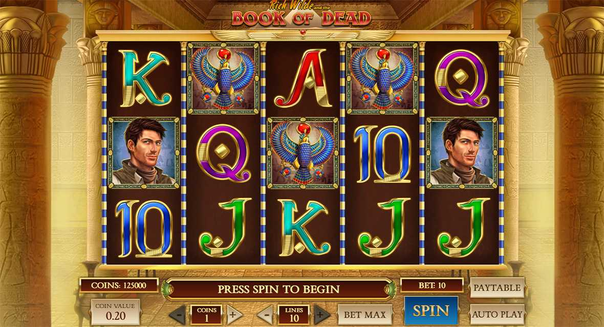
Free mode is an ideal entry ramp, provided you don't treat it like a rule-free sandbox. Imagine telling yourself "it's just free," then going for unrealistic bets and overly long sessions. You then learn a bad habit: speed and overbidding. The day you play with real money, your brain demands the same intensity.
To test effectively, do the opposite: low bet, short duration, and a precise objective. Possible objectives: understand screen interpretation, identify the trigger for a bonus feature, or test your exit discipline. Yes, your discipline. Because in a slot, the real danger isn't not understanding, it's not knowing when to stop.
Also, consider the environment. On mobile, we speed up. On a computer, we last longer. Imagine you're playing on your phone on the couch, with notifications popping up: you lose track, you come back, and you "catch up" by chaining actions. To avoid this, switch to silent mode, close heavy apps, and keep your timer off the game screen.
Finally, create an ending ritual. When the timer rings, you stop. Not "after two more rounds." The brain loves to negotiate. You, you need to be simpler than it.
Starting a Trial Session in France
Imagine you have ten minutes before an appointment. This is the best duration for a test: short, clear, difficult to stretch if you are rigorous. Choose a comfortable bet, spin a few rounds, then take a break in the middle, even if everything is going well.
During the break, ask yourself one question: "Am I calm or am I looking for a thrill?" If you're calm, you can resume. If you're looking for a thrill, close it. This is an adult rule, and it protects better than any speech.
If you then decide to play for real money, reproduce exactly the same routine at the start: test session, strict budget, breaks. A successful transition is not spectacular, it is gradual.
Book Of Dead Free: Differences Between Modes
The word "free" can mean several things depending on the context: no-obligation trial, demonstration, or access conditional on an offer. Imagine you mix everything up and expect the same experience everywhere. You risk misinterpreting what's happening and making unnecessary decisions (changing platforms, increasing bets, extending the session).
To stay clear, keep one principle: trial mode is for learning, real mode is for executing a plan. The two do not have the same purpose, and therefore not the same strategy. In trial, you seek understanding and discipline. In real, you seek consistency: same limits, same breaks, same exit rule.
Here's a simple table to compare approaches, without jargon and unrealistic promises:
Aspect | Demo Mode | Real Money Mode | Good Reflex |
Objective | Understand the rhythm | Play with a budget | Set a plan beforehand |
Bet | Very low and stable | Adapted to your comfort | Avoid overbidding |
Duration | Short, with a break | Short at the beginning | External timer |
Stress | Low, if supervised | Higher without routine | Mandatory break |
Typical Error | "I'm testing randomly" | "I'm recovering" | Stop at the first tension |
Imagine you're coming back from a break and you want to "force it". This table reminds you of one thing: it's not the time to look for a solution in the game, it's the time to look for a solution within your framework. Closing is sometimes the smartest decision.
Book Of Dead Free Spin: Managing Bonus Rounds
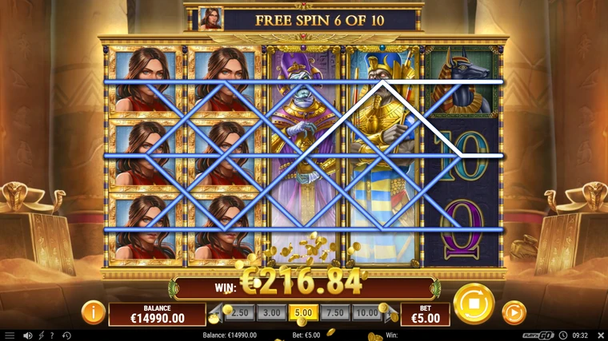
Bonus rounds are often the most exciting part of a slot, and therefore the most dangerous part for your discipline. Imagine you trigger a series of them and feel "obliged" to continue afterwards, because you want to recapture the same feeling. This is exactly where the plan needs to take over.
To manage well, you need to distinguish two things: the event (the series of bonus rounds) and your behavior (what you do next). The event is random. Your behavior is controllable. In 2026, it is this control that makes the difference between an enjoyable session and a session that turns into a chase.
Understand The Trigger Without Fantasizing
Imagine you start "watching out" for the trigger as if you could provoke it. You start speeding up, changing your bet, and playing longer than planned. Put things back in their place: you don't control the trigger, you control the duration of your test.
The useful approach is to observe, not to pursue. Take a short session, mentally note what repeats (small variations) and what remains rare (significant events). Then, close at the timer, even if you are "close" to something. "Close" is often an expensive illusion.
Go Through A Series Without Losing Control
Imagine you're in the middle of a bonus round and the excitement is building. The common reflex is to say "after this, I'll continue a bit". To break this reflex, impose a break immediately after the event, not later. An immediate break prevents you from riding the adrenaline.
During this break, look at only two things: your session budget and your remaining time. If you have exceeded either, you close. If you are still within limits but feel tense, you also close. The goal is not to maximize a feeling, the goal is to maintain a healthy habit.
When to Know When to Stop After a Good Run
Imagine you're ending a positive streak and you feel like “finishing on an even better note.” This is the trap of perfectionism: you move the finish line. To avoid it, set your finish line before the session. An exit time, an exit budget, a simple rule.
An effective technique: the closing rule. If you've had a strong moment (positive or negative), you end the session at the next break point. You don't restart a “new session” on the same evening. This protects your sleep, your mood, and your budget.
Book Of Dead Free Play: Support, Security And Habits
A player's comfort rarely depends on a single detail; it depends on a whole set: access, security, support, and account clarity. Imagine you forget your password, you panic, then you try ten combinations. You get blocked, you get annoyed, and you start the session in a bad state. All of this is avoidable with a routine.
In France, the right reflex is to consider gaming as a supervised adult activity: secure access, active limits, and the ability to properly ask for help. It's not “too serious”; it's what prevents you from making bad decisions when you're tired or stressed.
Mobile Or Computer: Choosing Your Ground
Imagine that on mobile you play faster and exceed your limits, while on a computer you remain more composed. In this case, the solution is simple: mobile for checking history and managing the account, computer for planned sessions. If it's the opposite, you reverse the rule, but you keep the timer.
Test with two identical mini-sessions: same duration, same stake, same break. The support that makes you stable is your best choice. And if no support makes you stable today, it's not a failure: it's a signal to pause.
Account Security And Clean Exit
Imagine you finish late and leave the session open “just in case.” The next day, you come back without a plan, and the session restarts. To avoid this: unique password, device lock, and systematic logout.
If a problem arises, don't “solve” it by playing more. Diagnose it: connection, restart, history check, then support. This simple method avoids emotional escalation.
Book Of Dead Free Slot Game: Choosing A Controlled Experience
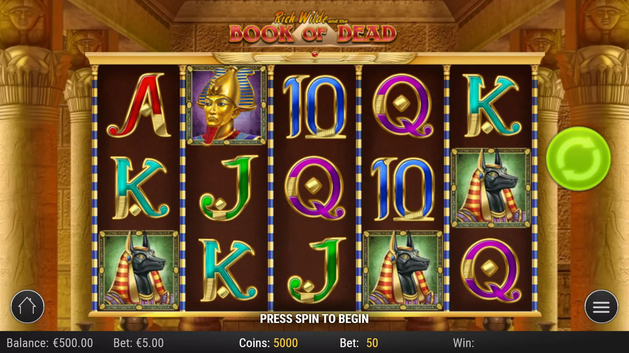
A free “slot game” can be an excellent learning tool, but only if you treat it as such. Imagine you chain free sessions all week, without a timer, without breaks, and without an exit rule. You're not training for the game; you're training for automatism. And automatism is exactly what causes budgets to spiral when real money comes into play.
The good experience is one where you control the beginning, middle, and end. Beginning: clear intention. Middle: mandatory break. End: clean shutdown. This trio is more important than all the “tips” you might read elsewhere, because it applies to your behavior, not to randomness.
Also, get into the habit of separating your evening into two blocks: playing, then managing. If you need to check a transaction, adjust a limit, or contact support, do it after closing the game. This prevents administration from becoming an excuse to restart a session.
Finally, take an honest look at your state. If you play to change your mood, you are more vulnerable. In this case, your best strategy is not to “find the right stake,” but to take a break. In 2026, self-control also means knowing when not to play.
FAQ
How to enjoy a no-deposit bonus without rushing?
Start by defining an intention and a duration, then read only the points that influence your behavior: activation, expiry, and validation steps before withdrawal. Imagine you accept everything in two clicks: you risk discovering constraints at the wrong moment, when you are already emotionally invested. Treat the offer as a supervised test, with a low stake, a break in the middle, and a non-negotiable exit rule. If the offer pushes you to play longer than expected, reduce the duration or skip your turn; it's often the healthiest decision.
What is the best routine for testing a game in demo mode?
Set an external timer, choose a comfortable stake, and enforce a mid-session break, even if everything is going well. Imagine you come back from a break with the urge to click faster: that's a sign that the rhythm is carrying you away, so the session must stop. Demo mode is for observing your reflexes, not for “ending on a good note.” Keep the same stake, don't change anything under emotion, and end at the timer, not at the mood of the moment.
How to avoid the recovery reflex after a bad streak?
The recovery reflex arises when you play to correct an emotion rather than to follow a plan. Imagine you think “I'll get back up and then stop”: you change your strategy at the worst moment. Set a simple rule: no increase in stakes after a negative sequence, only after a break, and only if you have calmed down. If the urge to push remains after the break, you close for the day. This rule protects your budget and prevents you from turning a game into a chase.
Why do mobile sessions get out of hand more easily?
On mobile, everything is faster: the gesture, the visual feedback, and the temptation of “just one more spin.” Imagine notifications popping up: you interrupt yourself, you come back, you lose your train of thought, then you chain plays to get back on track. The practical solution: silent mode, shorter duration, external timer, and an earlier break. If you still exceed your limits, reserve mobile for account consultation and do your planned sessions on a computer.
How to track a withdrawal without falling into anxiety?
Avoid constant refreshing, which increases tension without speeding anything up. Imagine you check every minute: you get annoyed and give yourself an excuse to play again while waiting. Set specific checking times, note the date, amount, and displayed status, then allow some time. If you need to contact support, send a structured message with this information, which reduces back-and-forth and prevents you from managing an operation under stress.
What security habits make the experience more serene?
Use a unique password, lock your device, and log out at the end of each session. Imagine you leave the session open “just two minutes”: you come back later without a plan, and the session restarts in automatic mode. Keep useful notifications for security, but reduce those that push you to return without intention. In case of a problem, treat it as a diagnosis (connection, restart, history check) before contacting support.
When is it better to take a real break rather than continue?
When you see a repetitive pattern: sessions getting longer, a desire to push harder, or gambling used to change your mood. Imagine three evenings where you planned ten minutes and ended up much later: it's no longer a coincidence, it's a cycle. A longer break breaks the cycle, gives you perspective, and allows you to return with lower limits and shorter sessions. It's not a punishment, it's protection for your budget and your balance.